Be yourself; Everyone else is already taken.
— Oscar Wilde.
This is the first post on my new blog. I’m just getting this new blog going, so stay tuned for more. Subscribe below to get notified when I post new updates.
Be yourself; Everyone else is already taken.
— Oscar Wilde.
This is the first post on my new blog. I’m just getting this new blog going, so stay tuned for more. Subscribe below to get notified when I post new updates.
An oligopoly describes a market structure which is dominated by only a small number of firms. That results in a state of limited competition. The firms can either compete against each other or collaborate. By doing so, they can use their collective market power to drive up prices and earn more profit. The oligopolistic market structure builds on the following assumptions: (1) all firms maximize profits, (2) oligopolies can set prices, (3) there are barriers to entry and exit in the market, (4) products may be homogenous or differentiated, and (5) there is only a few firms that dominate the market. Unfortunately, it is not clearly defined what a «few firms» means precisely. As a rule of thumb, we say that an oligopoly typically consists of about 3-5 dominant firms. An oligopoly describes a market structure which is dominated by only a small number of firms. That results in a state of limited competition. The firms can either compete against each other or collaborate. By doing so, they can use their collective market power to drive up prices and earn more profit.
To give an example of an oligopoly, let’s look at the market for water stations is Suclaban. This market is dominated by two businesses. That leaves all of them with a significant amount of market power.


In Suclaban, there are just two businesses, a water station to be exact. This is a type of market structure called oligopoly. Oligopoly is described as a small number of firms or companies. In this case, this means this 2 water stations are an oligopoly type of market structure.
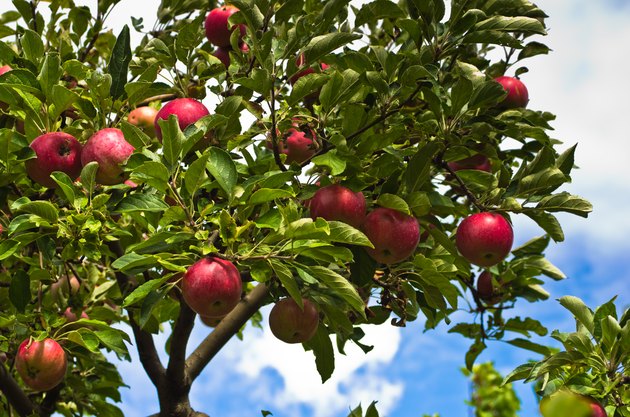
The apple tree also known as Malus domestica is a part of the rose family and best known for its sweet and tasty fruit. It is known worldwide to be the most low-cost fruit. They tree originated from Central Asia. . Apples have been grown for thousands of years in Asia and Europe. They were brought to North America by European settlers. Apples have religious and mythological significance in many cultures.
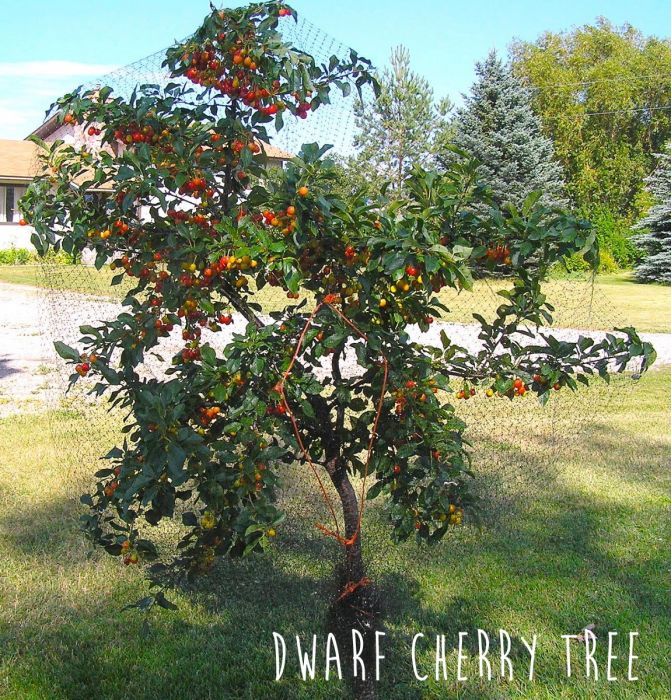
The cherry tree is also known as Prunus avium. The name ‘cherry’ also refers to the cherry tree and its wood, and is sometimes applied to almonds and visually similar flowering trees in the genus Prunus, as in “ornamental cherry” or “cherry blossom”. Wild cherry may refer to any of the cherry species growing outside cultivation, although Prunus avium is often referred to specifically by the name “wild cherry” in the British Isles.
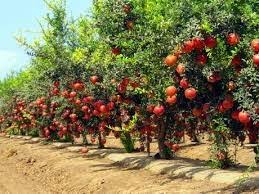
The pomegranate (Punica granatum) is a fruit-bearing in the family Lythraceae, subfamily Punicoideae, that grows between 5 and 10 m (16 and 33 ft) tall.
The fruit is typically in season in the Northern Hemisphere from September to February,[2] and in the Southern Hemispherefrom March to May. As intact arils or juice, pomegranates are used in baking, cooking, juice blends, meal garnishes, smoothies, and alcoholic beverages, such as cocktails and wine.
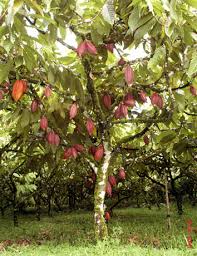
Theobroma cacao, also called the cacao tree and the cocoa tree, is a small (4–8 m (13–26 ft) tall) evergreentree in the family Malvaceae,[1][2] native to the deep tropical regions of the Americas. Its seeds, cocoa beans, are used to make chocolate liquor, cocoa solids, cocoa butter and chocolate.[3]
This is an example post, originally published as part of Blogging University. Enroll in one of our ten programs, and start your blog right.
You’re going to publish a post today. Don’t worry about how your blog looks. Don’t worry if you haven’t given it a name yet, or you’re feeling overwhelmed. Just click the “New Post” button, and tell us why you’re here.
Why do this?
The post can be short or long, a personal intro to your life or a bloggy mission statement, a manifesto for the future or a simple outline of your the types of things you hope to publish.
To help you get started, here are a few questions:
You’re not locked into any of this; one of the wonderful things about blogs is how they constantly evolve as we learn, grow, and interact with one another — but it’s good to know where and why you started, and articulating your goals may just give you a few other post ideas.
Can’t think how to get started? Just write the first thing that pops into your head. Anne Lamott, author of a book on writing we love, says that you need to give yourself permission to write a “crappy first draft”. Anne makes a great point — just start writing, and worry about editing it later.
When you’re ready to publish, give your post three to five tags that describe your blog’s focus — writing, photography, fiction, parenting, food, cars, movies, sports, whatever. These tags will help others who care about your topics find you in the Reader. Make sure one of the tags is “zerotohero,” so other new bloggers can find you, too.

 Asilo, Gulong, Yumul's blog